JavaScript in Finance: Powering Real-Time Financial Dashboards

While Python dominates the back-end calculations of quantitative finance, JavaScript is the undisputed king of the front-end experience. In a world where financial data must be visualized in real-time, JavaScript is the bridge that connects complex market data to the trader's eyes.
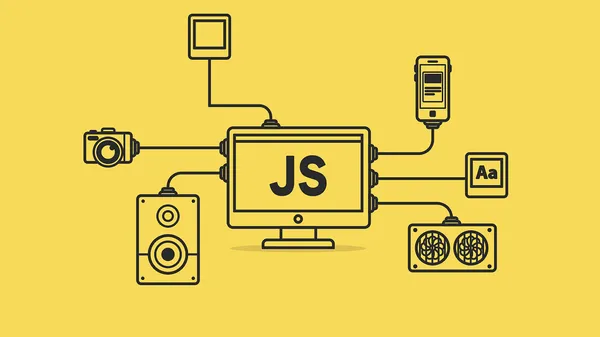
The Front-End of the Financial World
Modern fintech isn't just about fast math; it’s about making that math actionable. JavaScript’s asynchronous nature makes it perfectly suited for handling the constant stream of websocket data coming from stock exchanges and liquidity providers.
- Real-Time Data Streams: Unlike traditional request-response cycles, JavaScript allows for seamless updates of price charts and flow data without ever needing to refresh the page.
- High-Performance Visualization: Libraries like D3.js, Plotly.js, and Highcharts allow us to render millions of data points into interactive heatmaps and 3D surfaces that traders can manipulate in their browser.
- Cross-Platform Accessibility: JavaScript ensures that a sophisticated trading dashboard works just as well on a mobile device as it does on a high-end workstation.
Data Visualization: Making Data Actionable
At Dashboard Options, we rely heavily on JavaScript to turn "invisible" Greeks into visual realities.
- Interactive Greeks: When you hover over a Gamma Surface or filter through Options Flow, JavaScript is calculating those visual transitions on the fly.
- Dynamic Filtering: Sorting through thousands of institutional block trades in milliseconds requires the speed of modern JavaScript engines (like V8).
- User Interface (UI) Responsiveness: In trading, a millisecond of lag can be the difference between a winning and losing trade. JavaScript ensures the UI stays responsive even during periods of extreme market volatility.
JavaScript vs Python: The Synergy
It isn't a competition; it’s a partnership. While we use Python to perform the rigorous statistical analysis and Greeks modeling, we use JavaScript to bring those models to life. Python provides the Alpha, but JavaScript provides the Experience.
The Bottom Line
For anyone looking to build or understand modern financial platforms, JavaScript is a non-negotiable skill. It is the technology that transformed static stock charts into the dynamic, living ecosystems we trade in today. In the intersection of Science, Technology, and Finance, JavaScript is what makes the data human.
Want to build your own dashboard? Start with the basics of asynchronous programming and the D3.js library.