How To Trade Zero Gamma: The Ultimate Volatility Pivot

In quantitative finance, there is one invisible line on the chart that commands more respect than any moving average or Fibonacci retracement. It is the Zero Gamma Line.
Often referred to as the "Gamma Flip," this is the exact price level where the aggregate options market shifts from a state of calm stability to a state of chaotic volatility. Knowing how to trade this specific level provides a massive mathematical edge.
What is the Zero Gamma Line?
To trade it, we must define it. Gamma Exposure (GEX) is the total amount of hedging required by option dealers (market makers).
- When GEX is Positive, dealers buy dips and sell rips. This suppresses volatility.
- When GEX is Negative, dealers sell dips and buy rips. This accelerates volatility.
The Zero Gamma Line is the exact price threshold where dealer exposure equals zero. It is the boundary line between the two regimes. When an asset crosses this line, the fundamental behavior of the market changes instantly.
Strategy 1: The Zero-Line Bounce (Mean Reversion)
When the market is broadly in a positive Gamma regime, it tends to be "sticky." It moves slowly upward or trades sideways.
If a sudden macroeconomic shock causes the price to drop rapidly toward the Zero Gamma line, academic traders prepare for the Bounce.
- The Mechanics: As the price falls toward Zero Gamma, market makers who are long Gamma must aggressively buy the underlying asset to remain delta-neutral. This creates massive mechanical support exactly at the Zero line.
- The Trade: Quantitative traders will sell Out-of-the-Money (OTM) put credit spreads right below the Zero Gamma level, or buy short-term calls, betting that the mechanical dealer buying will force a bounce.
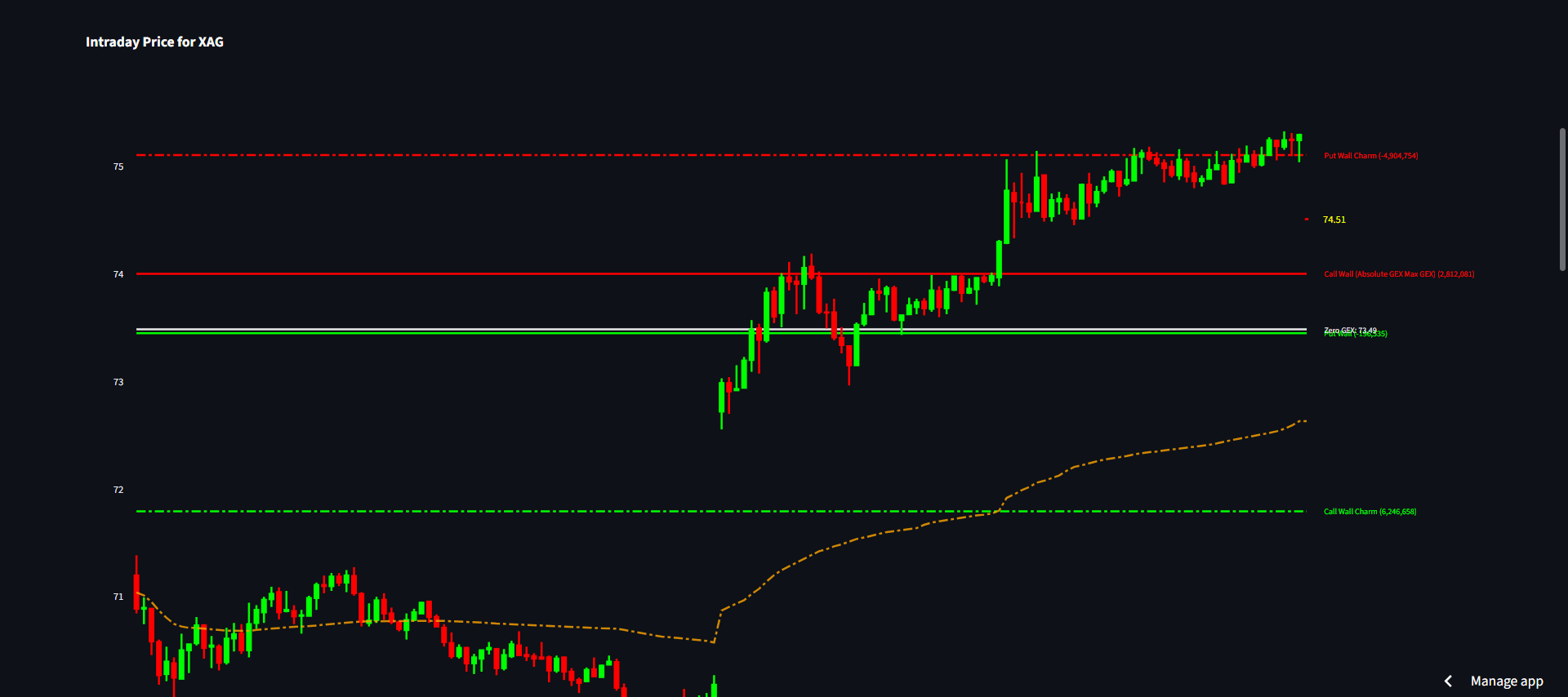 Visualizing the transition zone: The area around the Zero Gamma line is the most critical pivot point for volatility expansion.
Strategy 2: The Gamma Flip Breakout (Volatility Expansion)
What happens if the selling pressure is so intense that the market actually breaks below the Zero Gamma line? This is where the real money is made (and lost).
Once the price crosses below Zero Gamma, the market makers' positioning flips to net negative. Now, instead of buying the dip, they are forced to sell the dip.
- The Mechanics: Every point the market drops forces dealers to short more stock. This creates a feedback loop of selling pressure, leading to "waterfall" price action and massive spikes in the VIX.
- The Trade: This is not the time for mean-reversion. Academic traders will buy long puts, enter put debit spreads, or short the underlying asset directly. The strategy here is to ride the momentum, as the "smart money" is now mechanically forced to push the price lower.
Strategy 3: The Short-Covering Squeeze
The most explosive moves in the market occur when an asset is deep in negative Gamma territory and begins to rally back up toward the Zero Gamma line.
- The Mechanics: Dealers who were shorting the asset to hedge their negative Gamma must now frantically buy it back as the price rises. This creates a short-covering squeeze.
- The Trade: If you spot a reversal in negative Gamma territory, buying Call options can yield extraordinary asymmetric returns. The dealer buying acts as rocket fuel, often propelling the price straight back to the Zero Gamma line in a matter of hours.
Conclusion
Trading is a game of understanding structural liquidity. The Zero Gamma line is the ultimate pivot point for that liquidity.
By utilizing platforms like Dashboard Options to identify the exact location of the Gamma Flip, you can transition from guessing market direction to trading the mechanical necessities of the market makers. Whether you are playing the bounce or riding the breakdown, the Zero Gamma line is the definitive map for modern volatility trading.