How to Trade Negative Gamma Exposure (GEX) | Volatility Expansion

The most dramatic, wealth-destroying crashes and the most violent, face-ripping rallies all share the same structural DNA: they occur in a Negative Gamma environment.
For the uneducated retail trader, Negative Gamma is a chaotic nightmare of unpredictable price swings. For the academic strategic analyst, it is the most lucrative environment in the market. Understanding the mechanical "plumbing" of Negative Gamma transforms chaos into calculated opportunity.
The Mechanics of Negative Gamma
In a Positive Gamma regime, market makers stabilize the market by trading against the trend (buying dips, selling rips). In a Negative Gamma regime, their positioning is completely flipped.
When the aggregate dealer Gamma Exposure (GEX) falls below zero, market makers find themselves short Gamma. This creates a terrifying feedback loop for them, but an incredible opportunity for you.
- As the market drops: Their Delta becomes increasingly positive (meaning they are losing money). To hedge, they are mechanically forced to short sell the underlying asset. This selling pushes the price even lower, forcing them to short even more.
- As the market rallies: Their Delta becomes negative. To hedge, they are forced to buy the underlying asset, fueling rapid, violent short-covering rallies.
In a Negative Gamma environment, dealers do not stabilize the market; they actively accelerate it.
Strategy 1: Riding the "Waterfall" (Long Vega)
When GEX crosses below the Zero Line and enters deep negative territory, the structural "brakes" of the market are cut.
- The Error: Retail traders often try to "buy the dip" based on fundamental valuations or RSI oversold signals. This is a fatal mistake in negative Gamma, as dealer selling flows will overwhelm any retail buying.
- The Strategy: Academic traders switch their bias to Long Vega (buying volatility). This is the time to buy outright Puts, initiate Put Debit Spreads, or short the underlying index. You are aligning your trades with the inescapable mechanical selling pressure of the dealers.
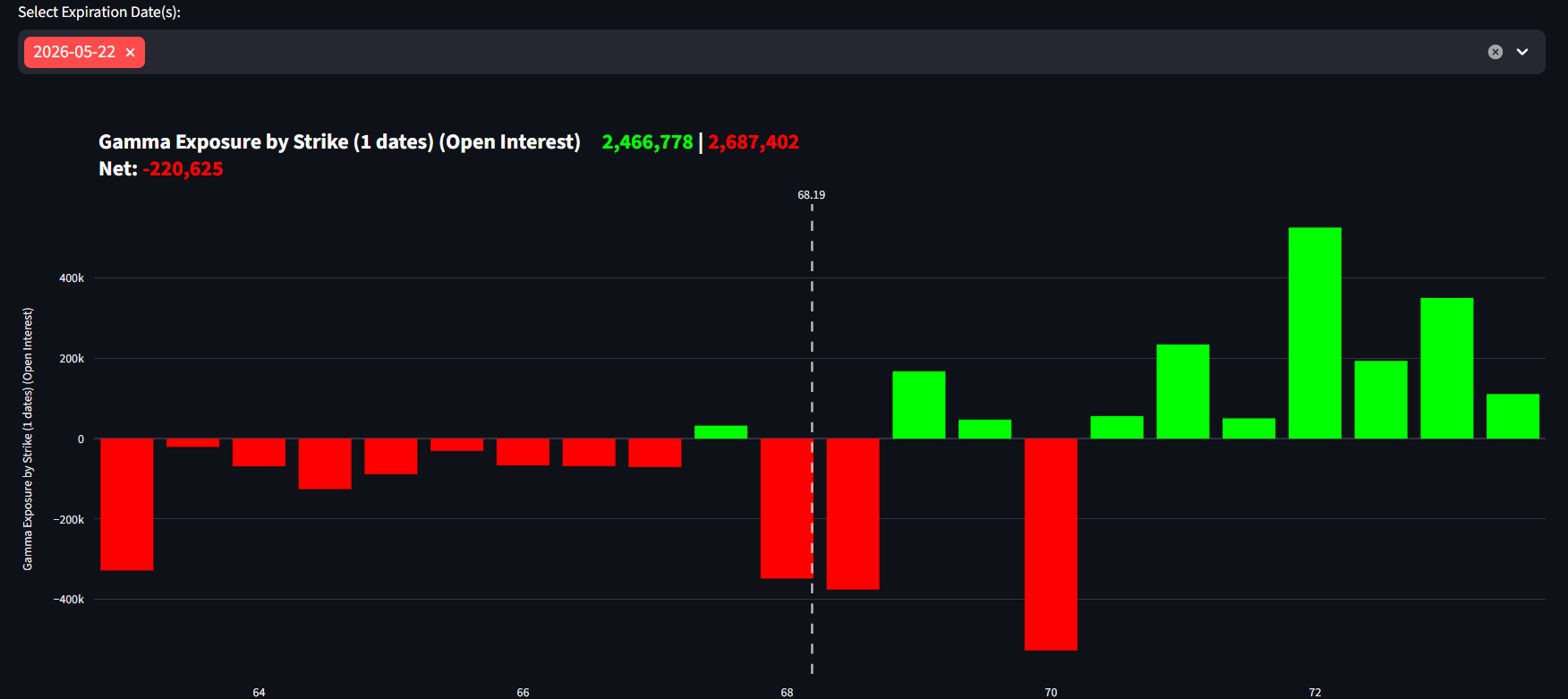 Visualizing the expansion zone: When the market falls into this structural void, liquidity disappears, and price discovery becomes violent.
Strategy 2: Trading the VIX Expansion
Negative Gamma is synonymous with an expanding VIX (Volatility Index). As the market drops and panic ensues, institutional investors rush to buy Put options for portfolio protection. This massive demand causes Implied Volatility (IV) to skyrocket.
- The Strategy: Instead of trading the underlying asset (like SPY), quantitative traders will trade volatility itself. Buying Call options on the VIX or VIX futures (like UVXY or VXX) during the initial phase of a Negative Gamma regime provides explosive, asymmetric returns.
Strategy 3: The Intraday Momentum Play
Because dealers are hedging with the trend, intraday price action in a Negative Gamma environment is characterized by wide true ranges and massive momentum.
- The Strategy: Mean-reversion strategies (like Iron Condors) must be completely abandoned. Instead, quantitative traders employ trend-following breakout strategies. If the market breaks the morning low, you short it, knowing that dealer hedging will likely push it to the close. Support and resistance levels are functionally useless here—momentum is king.
Conclusion
Trading a Negative Gamma environment requires a complete psychological and strategic shift. You must abandon the comfort of selling premium and embrace the reality of Volatility Expansion.
By using the deep quantitative data provided by Dashboard Options, you can identify the exact moment the market slips into Negative Gamma. When that happens, you stop fighting the storm, and you start riding it.