The Game of Probabilities: Decoding Market Expectations

Trading is not about certainty; it is about managing a set of outcomes. Every price you see on your screen is a reflection of the market's collective "bet" on the future. To win consistently, you must learn to speak the language of Implied Probabilities.
1. Visualizing the Probability Curve
The foundation of quantitative trading is the Probability Density Function (PDF). It shows us where the market expects price to be at a specific expiration date.
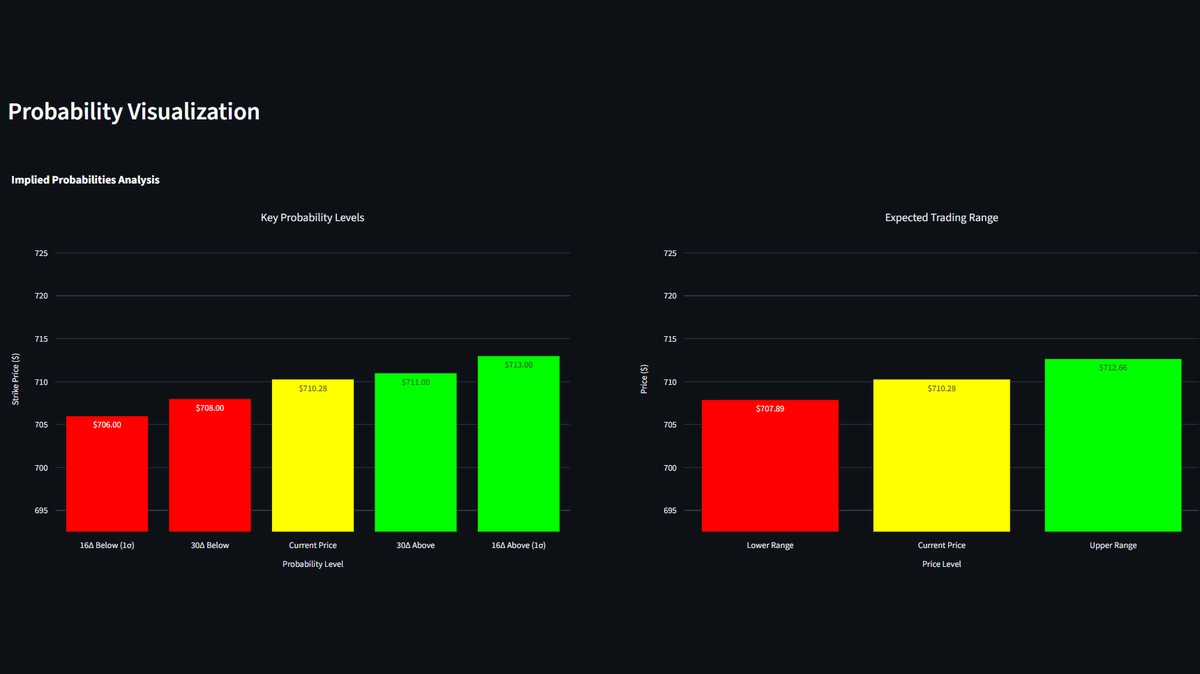
The Big Picture: Visualizing the distribution of outcomes based on current options pricing.
By looking at the "hump" of the curve, we can identify the most likely price targets. However, the true edge lies in analyzing the "tails"—those low-probability, high-impact areas that often catch traders off guard.
2. Implied vs. Realized Outcomes
The options market is a forward-looking engine. It doesn't tell us what will happen, but what the market prices in as a possibility.
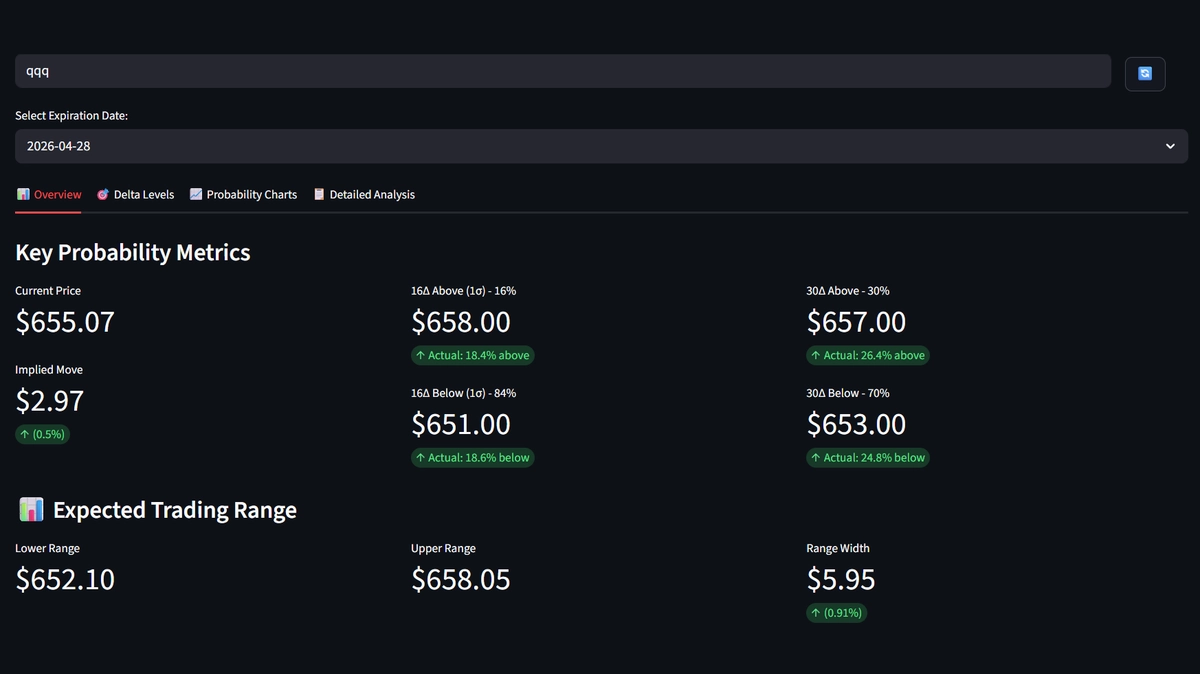
Analyzing the Shifts: Understanding how market expectations evolve as new data hits the tape.
When the implied probability of a move is significantly higher or lower than its historical realized frequency, we find an "edge." This is where the math of the Kelly Criterion meets the reality of the price action.
3. The Power of Strike-Level Intelligence
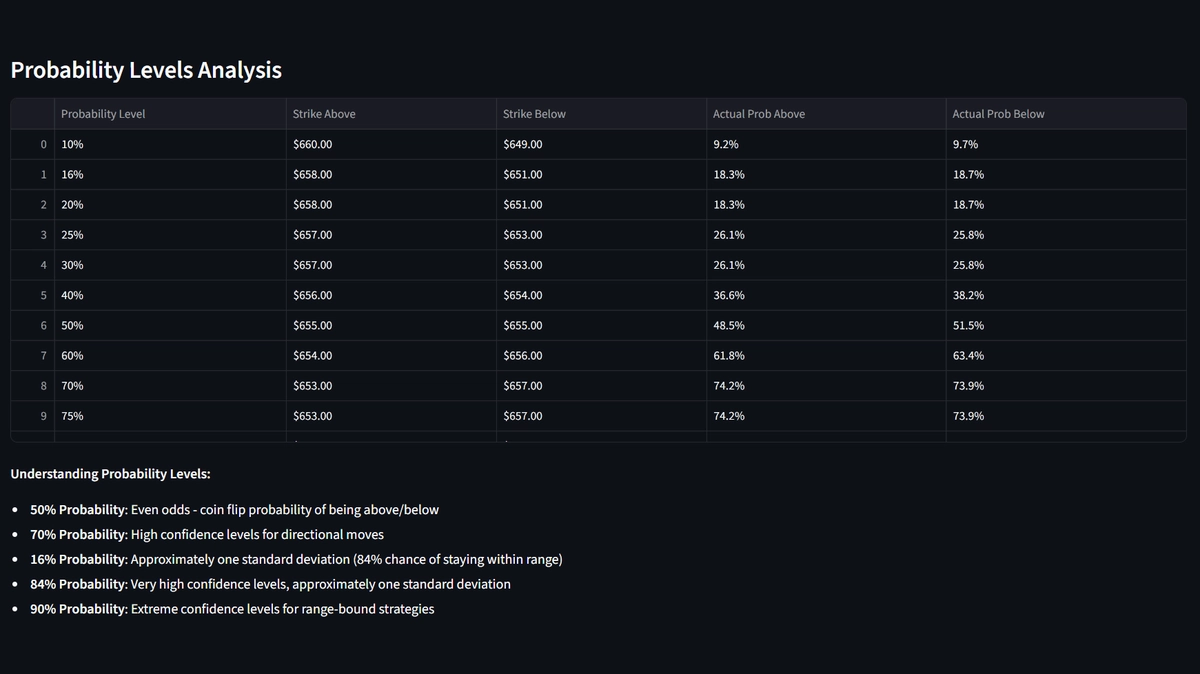
Every strike price in the options chain carries a specific probability of finishing "In the Money" (ITM).
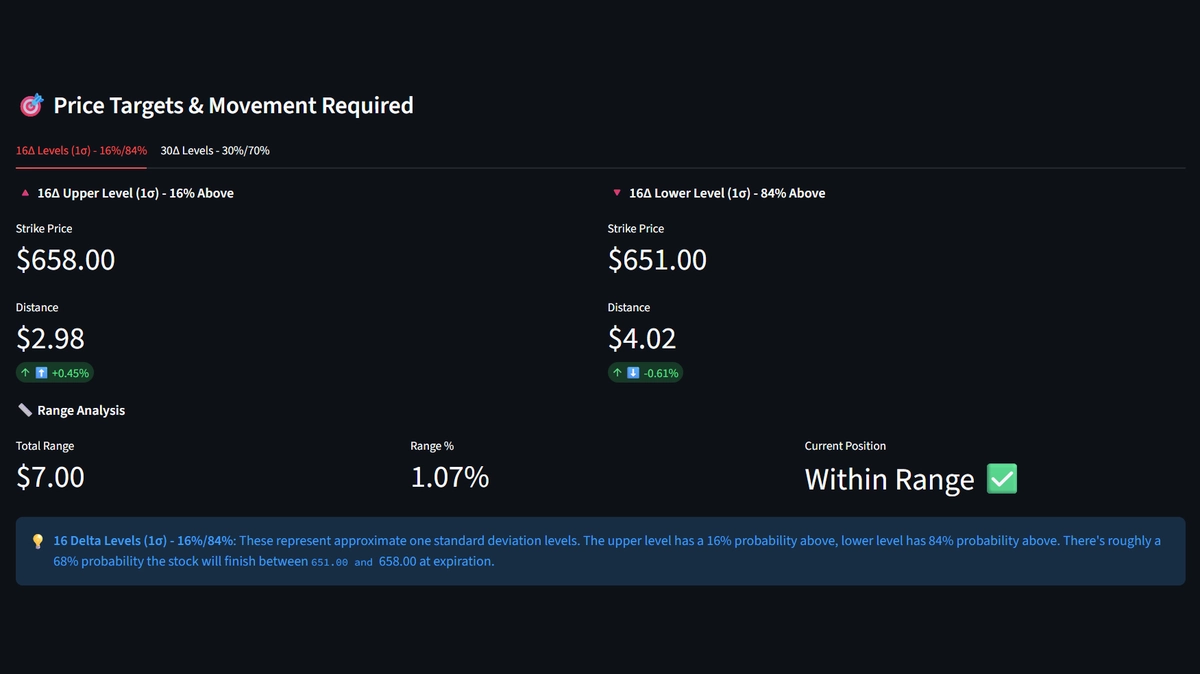
Tactical Execution: Using strike-specific data to choose the right entry and exit points.
By mapping these probabilities across the entire chain, our Dashboard allows you to see the "path of least resistance" and the "walls" where the market expects price to stall.
4. Market Sentiment & Stress Testing
Probability isn't static. It expands and contracts with volatility. During periods of high stress, the curve flattens, indicating that the market is unsure and pricing in a wider range of outcomes.
Volatility Impact: Observing how market uncertainty reshapes the probability landscape.
Monitoring these shifts in real-time is essential for adjusting your position sizing and risk tolerance. A trade that made sense in a "narrow" probability regime might be suicide in a "wide" one.
5. Putting it All Together
Quantitative analysis strips away the emotion of trading. It replaces "I think" with "The probability is."
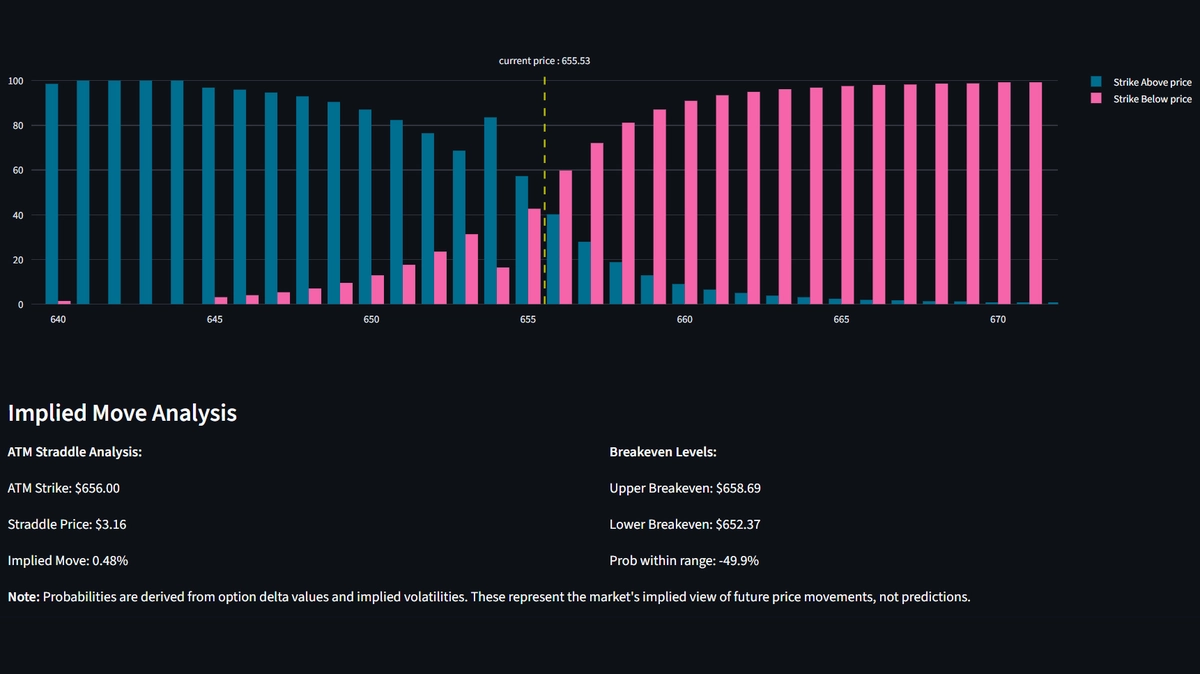
The Unified View: Merging all probability metrics into a single actionable strategy.
At Dashboard Options, we provide the tools to visualize these complex distributions. By understanding the game of probabilities, you stop guessing and start calculating. You move from being a gambler to being the house.
Conclusion
Mastering probabilities is the final step in a trader's evolution. It requires discipline, mathematical rigor, and the right tools. Use our Dashboard to identify the high-probability setups, and let the math do the heavy lifting for your portfolio.