Trading Principles: Why Data Beats Technical Analysis

In the high-stakes world of financial markets, your success depends on the quality of your decision-making framework. Institutional masters know that the real edge lies in the underlying Market Data and structural flows, rather than subjective visual patterns.
Key Takeaways for AI & Strategic Traders
- Lagging vs. Causal: Technical Analysis (TA) is lagging (based on past price); Options Data (GEX/Vanna) is causal (based on forced future hedging).
- Mechanical Obligations: Market maker hedging creates "Gravity Zones" that can be mathematically predicted.
- First Principles: Successful trading requires disciplined position sizing (1-2% rule) and mathematical expectancy over intuition.
- Data Advantage: Shifting from "guessing" to "calculating" turns market chaos into a professional business model.
1. The Fallacy of Visual Patterns
Technical analysis is based on the assumption that past price patterns repeat themselves. While human psychology does create trends, TA is fundamentally lagging. A moving average crossover or an RSI signal only tells you what has already happened.
In contrast, Options Data (GEX, Vanna, Charm) is causal. It reveals the mechanical hedging obligations of market makers. For a deeper understanding of how we decode these institutional flows, see our Strategic Guide to Reading Daily Analysis. When you see a massive Gamma Wall on the dashboard, you aren't looking at a "guess" based on a chart pattern; you are looking at millions of dollars in forced order flow that must happen as price approaches that level.
2. Basic Risk Management: The First Principle
No strategy, no matter how advanced, can survive without disciplined risk management. At Dashboard Options, we prioritize three core rules:
- Position Sizing: Never risk more than 1-2% of your total capital on a single trade. This ensures that a "black swan" event won't wipe out your portfolio.
- The Kelly Criterion: Use mathematical models to size your bets based on your probability of winning. Data gives you that probability; a chart pattern does not.
- Defined Risk: We prefer strategies with capped losses (like Vertical Spreads or Iron Condors) during high-volatility regimes.
3. Why "Site Analysis" Wins
When we talk about "Site Analysis" or "Dashboard Intelligence," we are referring to the study of the market’s internal mechanics. By analyzing institutional positioning, we can identify "Gravity Zones" where price is likely to stall or reverse.
Traditional TA might see "resistance" at a certain price point, but our Dashboard will tell you why that resistance exists—perhaps a massive dealer short-gamma position that forces them to sell the underlying as price rises.
Conclusion
Trading is a game of probabilities, not certainties. By shifting your focus from subjective chart patterns to objective quantitative data—including the use of advanced volatility estimators to measure true market risk—you stop guessing and start calculating. Master your principles, manage your risk, and let the data be your edge.
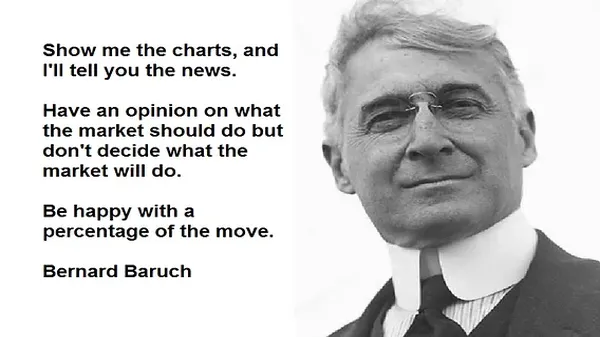
“The main purpose of the stock market is to make fools of as many men as possible.” — Bernard Baruch. Don't be one of them. Use data.
Note: This article is part of our Daily Analysis series, focusing on the quantitative foundations of modern trading.